I’m not immune to the seduction of resolutions—especially the earnest, well-meaning, health-adjacent ones that arrive every January like a relative who insists this time will be different. For a good twenty-five Januarys, I promised myself 10,000 steps a day. And for twenty-five Januarys, I failed. Spectacularly. Usually by Day Three. I would start strong—laps around the block, pacing during phone calls, circling the grocery store one aisle too many—and then, inevitably, I’d slide back into my default setting: moving my body the way my grandmother did—when life required it.
The same cycle followed other noble intentions: daily journaling, 5 a.m. wake-ups, crunches I resented while doing them and forgot about immediately after, mindfulness apps downloaded with hope and abandoned with guilt. By mid-January, my phone would be full of reminders of who I wasn’t becoming.
A few years ago, though, I made a different kind of resolution. One born not of aspiration, but of exhaustion. I decided to stop setting myself up for failure.
Now, during the first week of January—usually with a cup of masala chai cooling beside me—I make a list of the things I did the previous year that genuinely made me feel good. Not impressive. Not optimized. Just good. When my memory falters (which it does), I scroll through my camera roll: light on water, sandy feet, half-eaten meals, people I love caught mid-laughter.
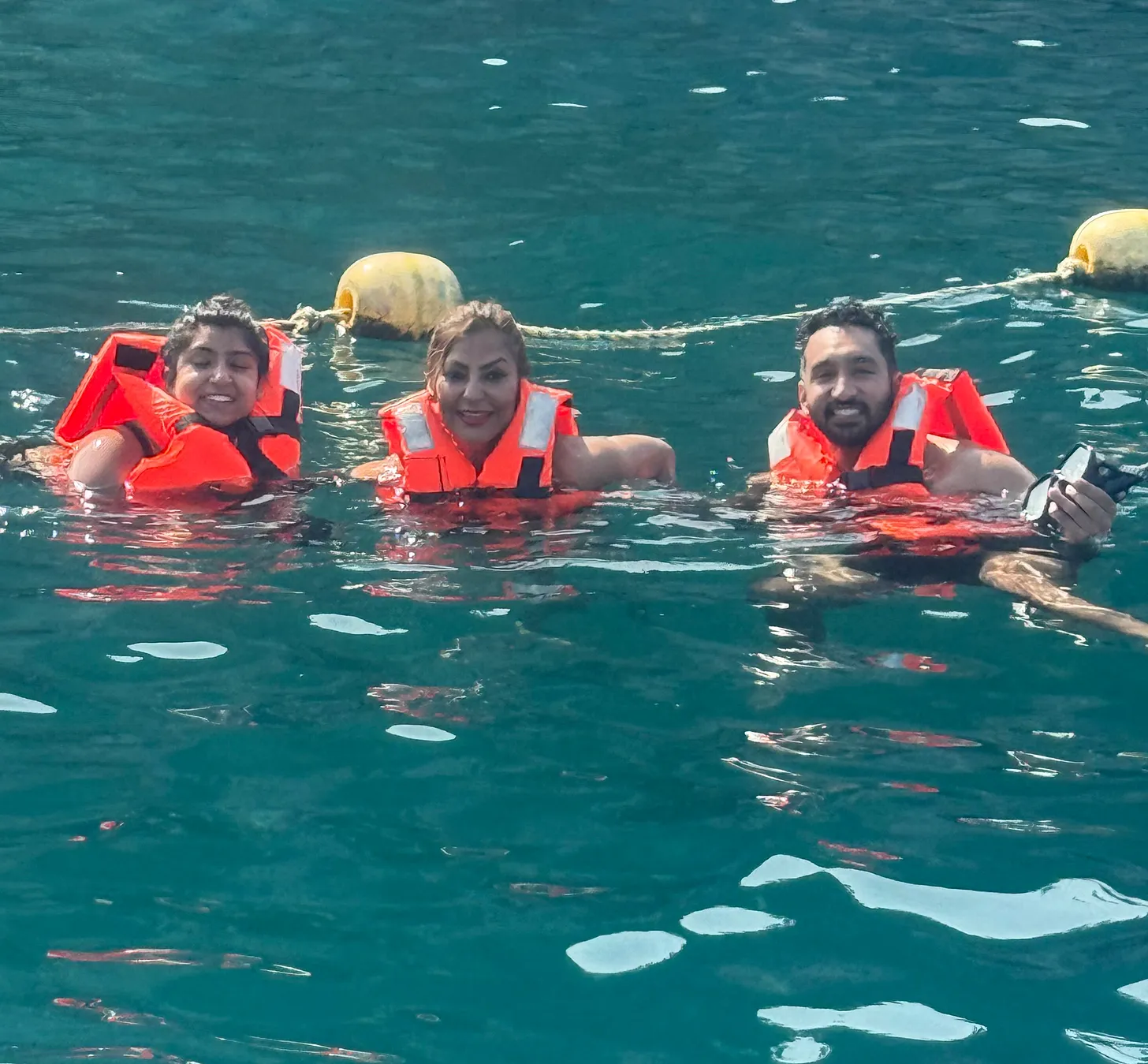
This year’s list included seeing live performances—the Broadway musical, The “Devil Wears Prada” in London, and Naseerudin Shah in the play “Einstein” in New Delhi—travel that unsettled me in the best ways (read my post about my African safari, here, and here), long walks in the park with friends where conversation wandered from aging parents to childhood myths, and swimming in the ocean (albeit with a life vest) for the first time.
Once the list is done, I do something quietly radical: I treat joy like an appointment. I open my calendar and make room for more of what already works. I set reminders to check which artists are touring and when tickets go on sale. I block off afternoons to research travel or plan small escapes. I email friends instead of vaguely meaning to see them. I plan dinners the way my mother planned festivals—deliberately, with foresight, and the belief that gathering sustains us.
It’s my way of future-proofing happiness—by planning for the things I already know will feed it.
This approach made me curious about how others think about resolutions, so I researched a few people whose work I admire.
Oliver Burkeman, author of Meditation for Mortals, offers a gentle corrective. Resolutions, he said, often make us feel worse because we expect sweeping change executed perfectly from the outset. His advice: start badly. Ten imperfect minutes doing the thing, he said, is infinitely more valuable than the most beautiful plan never acted upon.
That idea stayed with me as I stood at the water’s edge on Thanksgiving week this year, while the rest of my family floated easily in the warm Pacific off the coast of Puerto Vallarta, Mexico. The ocean, with its dark, unknowable depth, has always felt different—too vast, too indifferent. The idea of what lay beneath the surface triggered a kind of primal fear, the sort that arrives fully formed and refuses reason.
I have tried to learn how to swim three separate times in my life. life. The first was in New Delhi, at the Gymkhana Club, where a sudden bout of leg cramps left me shaken and discouraged enough to quit. The second attempt came during a summer visit to my grandparents in Malaysia. That effort ended far more painfully: I was molested by my swimming instructor, and I walked away carrying not just fear, but shame and embarrassment that made returning to the water feel impossible. Years later, after I had moved to the United States, my husband encouraged me to try again, this time with an instructor at the Bay Club. I had just begun to build confidence when the company he worked for abruptly shut its doors, plunging us into an unexpected financial crisis. Once again, swimming became a luxury we could no longer afford—and another unfinished chapter in a long history of trying and stopping.
The salt air hung heavy, the sun sharp against my skin. As I stepped into the water, my heart began to race; anxiety tightened its grip, and I retreated quickly to the perceived safety of the boat. Ahead of me, the horizon stretched endlessly, the ocean floor invisible, the water moving with a confidence I did not possess.
That’s when my son and daughter—both trophy-winning swimmers, bodies at home in water—took over. They climbed back onto the boat, guided me carefully down the small ladder, and walked me out into the sea. They didn’t rush me or dismiss my fear. Instead, they positioned themselves on either side of me, one hand in each of theirs, their voices calm and steady.
You’re safe, Mama. We’ve got you. Lean back. Trust the water. They reminded me to breathe. They showed me how to float, how to let the water hold me instead of fighting it.
And then, astonishingly, it did.
For a few moments—then longer—I was suspended. The ocean rose and fell beneath me, carrying my weight. My fear loosened its grip. I could hear my children laughing, feel the sun on my face, the salt on my lips. The bottomless water was still there, but it no longer mattered. What mattered was this: I was not alone, and I did not have to master anything to belong.
I grew up in a culture that values continuity as much as change, where rituals repeat, seasons return, and becoming is often quieter than transforming. The older I get, the more I trust that rhythm.
Chris Bennett, Nike Running’s global head coach, offers the same reframe: skip resolutions altogether, he advises. Instead, double down on the healthy habits you already have—and celebrate them. Maybe you read before bed. Maybe you show up for people. Maybe you try again at something that once scared you, even if you do it imperfectly.
Back when I used to pore over glossy magazines, January issues were filled with phrases like ‘New Year, New You
.’ These days, that slogan feels unnecessary, even a little cruel. The new year doesn’t require reinvention. It doesn’t demand that we conquer our fears or fix ourselves.
Sometimes, it asks only that we step into the water—held by the people who love us—and let ourselves float.
The old you already knows how to survive. And, if you’re willing to listen, she knows how to feel joy too.
FICTION WRITING TIP
A story is a war. It is sustained and immediate combat. The four imperatives for the writing of this war story, as stated by Mel McKee, editor and teacher, are:
(1) get your fighters fighting, (2) have something—the stake—what they are fighting over, (3) have the fight dive into a series of battles with the last battle in the series, the biggest, and most dangerous of all, (4) have a walking away from the fight.
WRITING PROMPT
- Write yesterday’s fortune cookie. It got everything wrong.
- Write last year’s fortune cookie. It got everything right.
Let the hush and stillness of the season inspire new writing. Give yourself more gentle discovery time with your work-in-progress.