
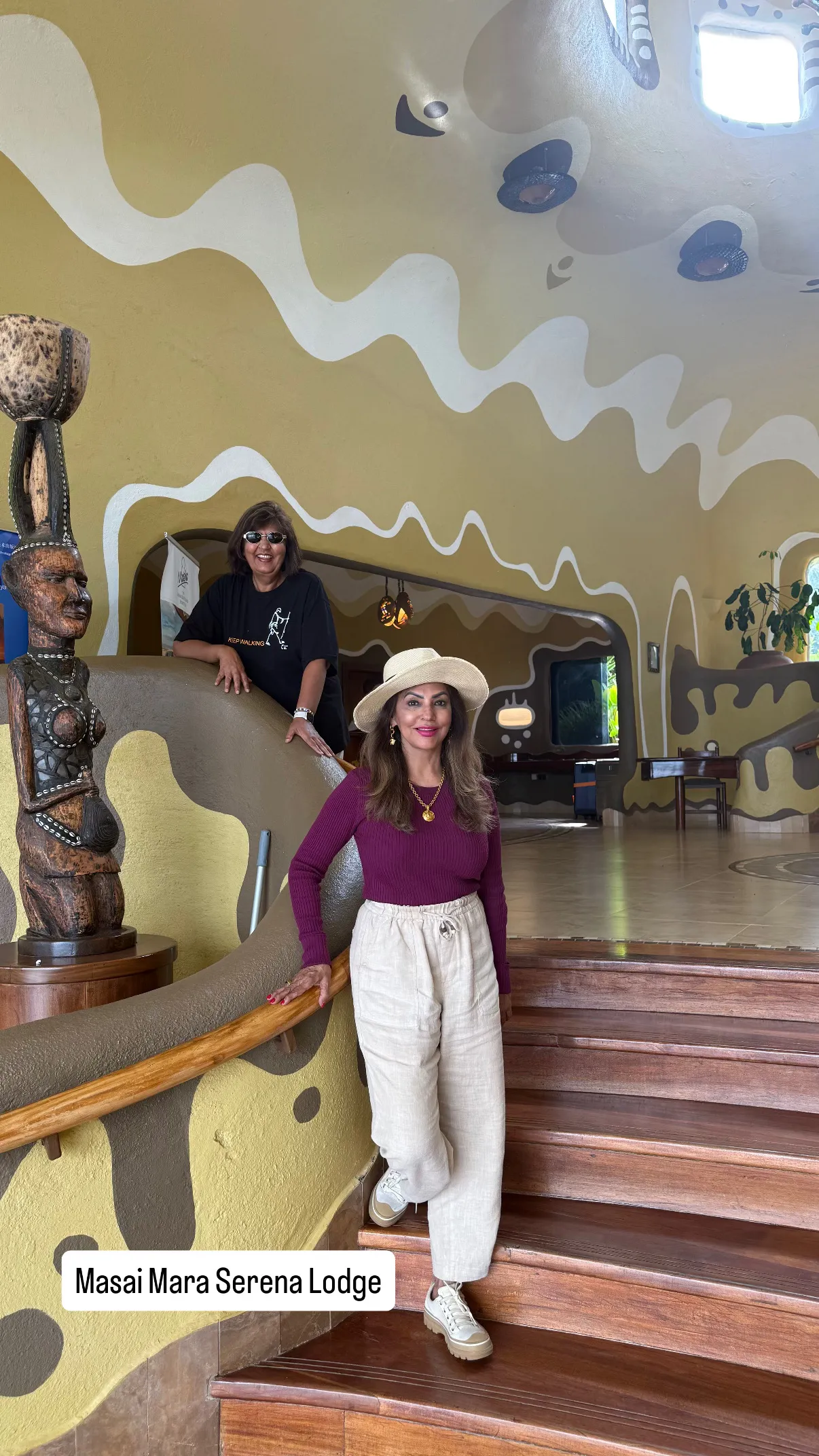
The fascination of Africa, once it has gripped a man, never leaves him. The spell of the sun-drenched plains, the mystery of the silent bush, the thunder of mighty rivers, the crashing of unseen game in the tangled depths of the forest – all these things are but the outward symptoms of the hidden magic that draws men back to her again and again.” – Frederick Courtney Selous
Everyone who goes on safari talks about spotting the Big Five. But what about the other animals you encounter while bouncing across the African wilderness in a 4×4 Land Cruiser? Beyond the headline acts, there’s a whole cast of fascinating creatures that play vital roles in the ecosystem—each one adding its own magic to the safari experience.
GIRAFFES
Giraffes are fascinating creatures—they are the tallest land mammals on Earth. Adult males can grow up to 18 feet tall, and females up to 14 feet. Just like human fingerprints, no two giraffes have the same spot pattern. These spots also help regulate body temperature. Giraffes sleep only about 4.6 hours a day, often in short naps, and often standing up to avoid being attacked. They have built-in shades— their long dark eyelashes and pigmented skin helps protect their skin from the harsh African sun.
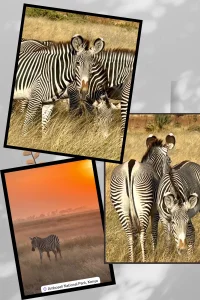
Zebras, with their striking black-and-white stripes, roam across every corner of the vast African savannah. What color are zebras? If you answered black and white, you’re wrong. They are white-skinned with black stripes. Babies and zebra foals have brown stripes. They become black as they mature. No two zebras have the same stripe pattern—each one is as unique as a fingerprint. Scientists can actually identify individual zebras by their stripes. Like giraffes, zebras have very strong legs. A zebra’s kick can break a lion’s jaw—or worse. Zebra foals can stand within 15 minutes of birth and run within an hour—a survival trait in the predator-filled savanna.
HYENAS
yenas are nature’s “clean-up crew” because they are scavengers that feed on the remains of a carcass after it has been picked clean by lions, and other predators. This helps prevent the spread of disease and keeps ecosystems in balance. Hyena clans are led by females, and even the lowest-ranking female outranks the highest-ranking male. Girl power, wild-style. Spotted hyenas live in large social groups, or clans, sometimes with over 80 individuals. They use vocalizations, scent-marking, and body language to communicate.
HIPPOS
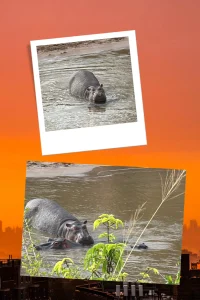
Hippos may look slow and cuddly, but they’re one of the most dangerous animals in Africa, responsible for more human deaths than lions or elephants. They can be aggressive and territorial, especially in water. They can’t actually swim. Instead, they walk or bounce along the riverbed, and use their buoyant bodies to float or glide through water. Hippos are herbivores, eating about 80 pounds of grass a night, but they’ve been observed showing aggression toward other animals, and in rare cases, even attacking boats or crocodiles. Female hippos often give birth underwater, and the newborn must swim to the surface to take its first breath—pretty epic for a baby!
CROCODILES
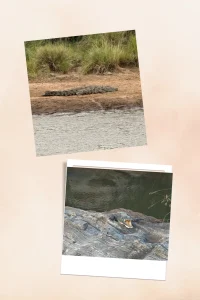
Crocodiles have been around for over 200 million years—they survived the mass extinction that wiped out the dinosaurs! Crocodiles can’t chew their food. They use a death roll—a violent spinning move—to tear off chunks of meat. Their eyes, ears, and nostrils are positioned on the top of their head, allowing them to stay almost completely submerged while stalking prey. Crocodile tears are real—but misleading. Yes, crocs produce tears (to keep eyes moist), but they’re not crying out of emotion. The phrase “crocodile tears” refers to fake sorrow.
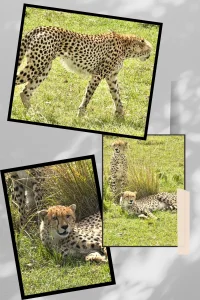
Cheetahs are the fastest land animal—they can sprint up to 70 mph (113 km/h) in short bursts, making them the fastest land animals on Earth. They can accelerate from 0 to 60 mph in just 3 seconds—faster than many sports cars! They are smallest of the big cats—weighing between 75 to 140 pounds. Their build is all about speed, not strength. They are endangered—fewer than 7,000 cheetahs remain in the wild. Cheetahs were once kept as status symbols by pharaohs, Indian royalty, and Persian nobles. Akbar the Great reportedly had a personal collection of over 1,000 cheetahs!
WRITING TIP
Every morning for a week, sit down before breakfast and freewrite a paragraph of whatever comes into your head. At the end of the week, read the pages over, circling any word, phrase, person, place or thought that seems interesting to you. Pick one. Freedraft a page about it.


