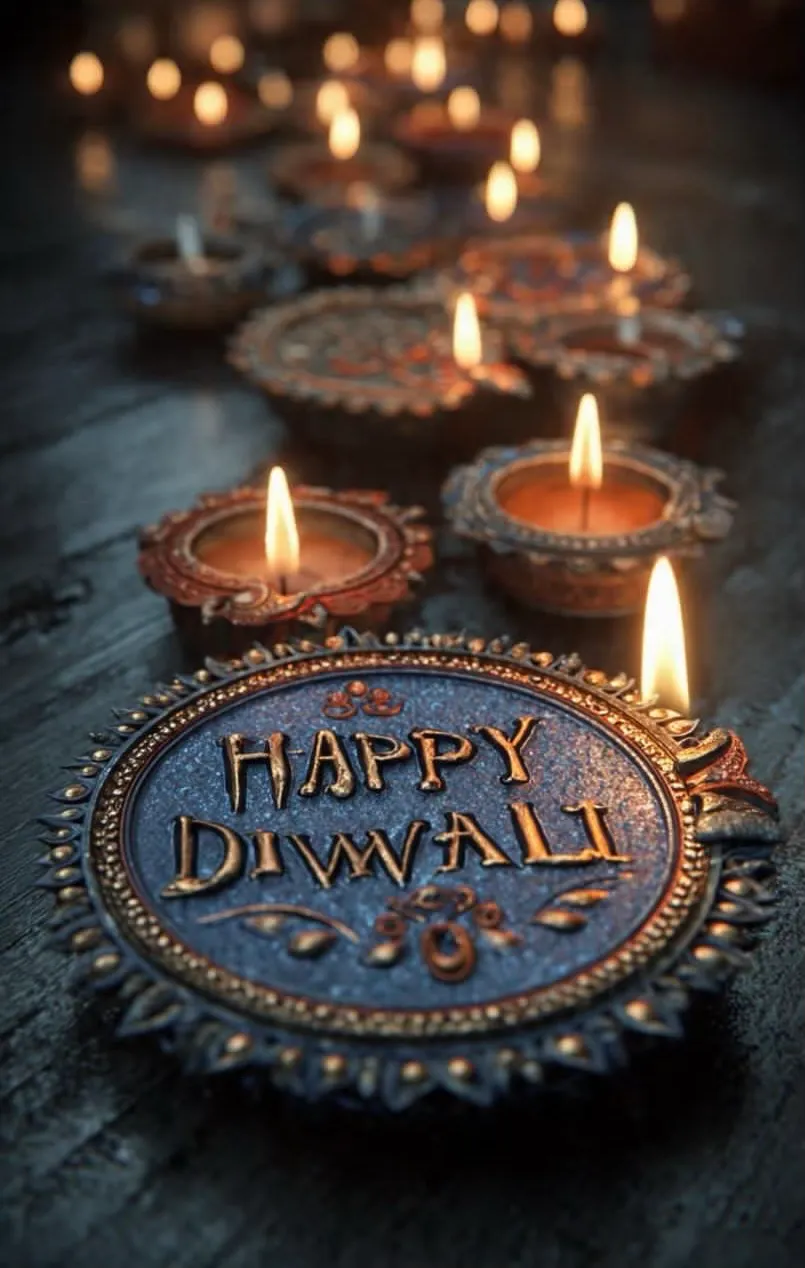
Growing up in India, Diwali wasn’t a day—it was a season.
Weeks before the festival, our home buzzed with anticipation. My mother would polish the silver diyas until they gleamed like tiny moons, while my father hung strings of marigolds across the entryway, their citrus scent announcing that celebration was near. The kitchen became a joyful chaos—pressure cookers whistling, cardamom-scented steam fogging the windows, and the steady rhythm of conversation punctuated by laughter. Outside, my brothers and I, with our cousins, dashed about with sparklers, their faces lit by both flame and pure delight.
Back then, light was everywhere—on rooftops, in the night sky, and in the stories our elders told. We didn’t have to search for it. It found us easily.
Now, oceans away, Diwali looks and feels different. The marigolds are plastic, bought from a party store. The diyas are battery-operated, flickering with the even rhythm of American efficiency. Instead of siblings tumbling through the courtyard, there are neighborhood kids asking if Diwali is “like Christmas with candles.” My cousins appear on a screen, the Wi-Fi lag stretching our greetings across continents. Yet, somehow, amidst the distance and translation, the essence remains.
Because that’s what it means to celebrate Diwali in the diaspora—it’s not about replicating the exact rituals but reinventing them. We learn to make space for memory and modernity to coexist.
I’ve seen it in the ways our communities adapt: in potlucks where gulab jamuns share the dessert table with pumpkin pie; in the fusion playlists where Bollywood meets Beyoncé; in the pride that blooms when a child explains the meaning of Diwali to their classmates. It’s in the aunties who distribute boxes of homemade sweets at the local temple, the teenagers who paint rangolis on sidewalks, the families who light candles on suburban porches, reminding the neighborhood that light belongs to everyone.
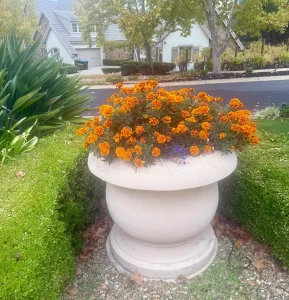
The marigolds blooming in my yard are a bright, happy sign of the season
When I was younger, I thought the purpose of Diwali was to banish darkness—the mythological kind, embodied in demons and epic battles. But living abroad has taught me that the darkness is often quieter and more personal. It’s the loneliness of missing your people, the ache of displacement, the longing for the soundscape of another country. The rituals, then, become less about spectacle and more about survival. Lighting that single diya on your college dorm windowsill (as my daughter does) is a small act of resistance—a declaration that no matter where we are planted, our roots still remember the soil they came from.
Every year, as I press my palms together in the Gurudwara my husband and I faithfully visit on Diwali day, I think of the generations before me who carried this same gesture across wars, migrations, and oceans. I think of how the light has endured—not because it’s grand, but because it’s steadfast. It finds a way to glow in new homes, new languages, new landscapes.
So, this year, as I set out the string lights on my California porch and FaceTime my family back home, I remind myself that Diwali isn’t bound by geography. It’s carried within us—the scent of ghee lamps and the rhythm of laughter stored in our bones. It’s the promise that even in the loneliest of places, light can still find its way through the cracks.
To everyone celebrating across the diaspora: may your homes shimmer with warmth, may your hearts feel connected across time zones, and may your traditions—old and new—remind you that belonging is not a place, but a glow you carry within you.
Happy Diwali. May your light travel far.
Thank you for reading “Notes from Anoop.” How do you celebrate Diwali—or keep your cultural traditions alive—wherever you are? I’d love to hear in the comments.
FICTION WRITING TIP
Every compelling story begins with curiosity. Instead of sitting down to explain something you already know, start by asking a question you don’t yet have the answer to.
What would make someone betray the person they love most? What happens when a secret finally surfaces? What does forgiveness really look like?
When you write from a place of inquiry, your story gains tension and depth. The reader senses that discovery is happening in real time — for the characters and for you. After all, fiction isn’t about knowing; it’s about searching.
WRITING PROMPT
Choose a central dramatic incident from your life.
Write about it in first person, and then write about it in third person. Write separate versions from the point of view of each character in the incident.
Have it happen to someone 10 or 20 years old or younger than yourself.
(**If you’d like a free critique on the piece you generated from this prompt, I’d be happy to look it over.)